The entire team at the Sustainable Seas Institute is bursting with pride for Sam Phillips, a dedicated Honors College undergraduate at UNC Charlotte! Sam recently presented his research at the Honors College Undergraduate Research Symposium, marking a huge accomplishment and demonstrating the dedication and hard work he poured into his project.
Presenting complex research at this level is a testament to Sam’s commitment, and we couldn’t be more thrilled to celebrate his contribution to the field of ocean science.
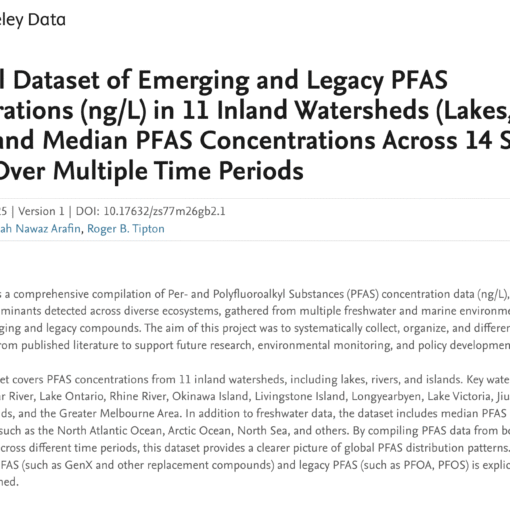
Tracking the Tides of Contamination
Sam’s research focused on a critically important challenge for global ocean health: accurately modeling the spread of pollution. His work utilized the MITgcm (MIT General Circulation Model) software to simulate water contamination in the world’s oceans.
The Power of MITgcm
The MITgcm is one of the most sophisticated numerical tools available to oceanographers. It is a powerful General Circulation Model that simulates the physics of fluid motion—like ocean currents, temperature, and salinity—by solving complex equations, including the Navier-Stokes equations.
By using this advanced software, Sam was able to treat pollutants as ocean tracers, simulating their long-term transport and fate throughout the global water column.
This kind of predictive modeling is essential for the Sustainable Seas Institute’s mission because it allows researchers to:
- Predict Spread: Forecast where contaminants—whether they are microplastics, heavy metals like mercury, or even industrial runoff—will travel due to ocean currents.
- Identify Accumulation: Determine potential “hotspots” where pollutants are likely to accumulate in water masses or sink into sediments.
- Inform Policy: Provide crucial data for policymakers to develop targeted strategies for remediation and pollution mitigation.
Sam’s work directly showcases how advanced computational modeling is paving the way for a more comprehensive understanding of marine pollution dynamics. It represents a vital step in moving from merely observing contamination to proactively predicting and preventing its worst effects.
A Future for Sustainable Seas
Sam Phillips’ success at the UNC Charlotte Honors College Symposium is an inspiring example of how undergraduate research can tackle global issues. His dedication to using advanced tools like the MITgcm to address water contamination highlights the bright future of ocean stewardship.
Congratulations again, Sam! We look forward to seeing the incredible impact you will continue to make on the sustainable seas of our world.